
Pilates for Runners: Prevent Injury and Improve Performance
As a former collegiate runner who discovered Pilates during my competitive years, I can tell you with absolute certainty: Pilates transformed not just my running, but my entire relationship with my body and my sport.
Running is one of the most accessible and popular forms of exercise—just lace up your shoes and go. But it’s also one of the most injury-prone activities. Studies show that between 50-70% of runners experience an injury each year that interrupts their training. Many of these injuries are entirely preventable with proper cross-training, and Pilates might be the most effective cross-training method available.
Whether you’re training for your first 5K or your fiftieth marathon, running the trails around Monument and Pikes Peak, or pounding pavement through Colorado Springs neighborhoods, Pilates can help you run stronger, faster, and injury-free for years to come.
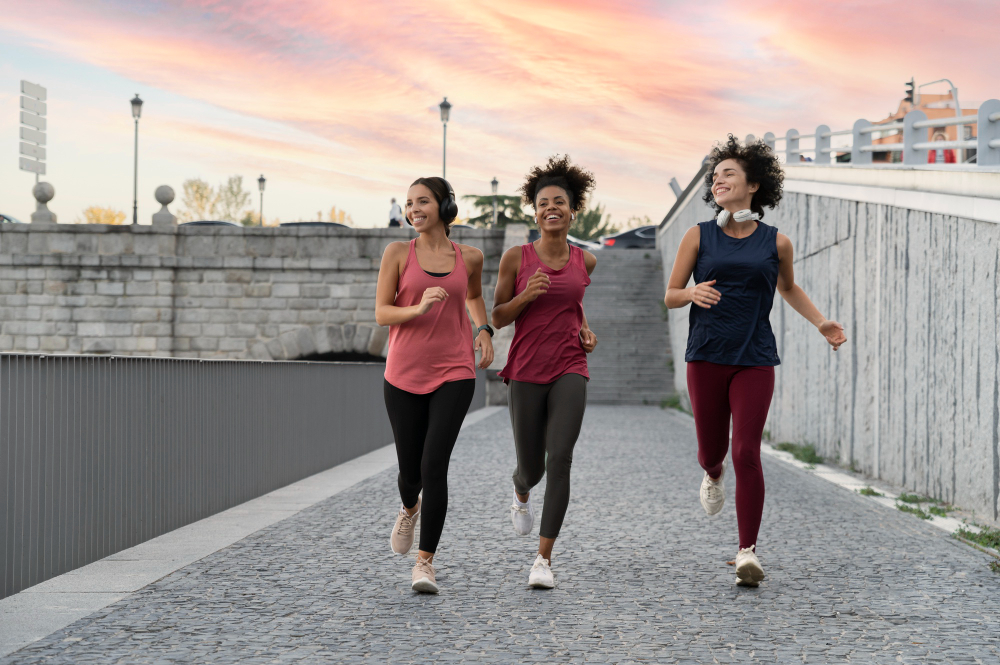
Why Runners Need Pilates
Running is a repetitive, single-plane movement. You move forward, over and over, with minimal lateral or rotational motion. While this makes running efficient, it also creates predictable muscle imbalances and weaknesses.
The runner’s typical profile:
- Strong quads, weak hamstrings and glutes
- Tight hip flexors from all that forward motion
- Weak deep core stabilizers
- Limited ankle mobility
- Tight calves and weak tibialis anterior (shin muscles)
- Poor upper body strength
- Weak feet and intrinsic foot muscles
These imbalances don’t just limit performance—they’re the root cause of most running injuries. But here’s the good news: Pilates directly addresses every single one of these issues.
The Seven Ways Pilates Makes You a Better Runner
1. Builds Functional Core Strength for Better Running Economy
When most runners think about getting faster, they focus on leg strength and cardiovascular fitness. But your core is where running power actually originates.
The science: Every time your foot strikes the ground, your body absorbs 2-3 times your body weight in impact force. Your core muscles must stabilize your pelvis and spine against these forces thousands of times per run. Weak core muscles mean wasted energy, poor running form, and increased injury risk.
How Pilates helps: Unlike crunches or planks that target superficial abdominal muscles, Pilates exercises activate the deep core stabilizers—transverse abdominis, multifidus, and pelvic floor muscles—that actually matter for running.
Exercises like the Hundred, Single Leg Stretch, and Reformer footwork demand continuous core engagement while your limbs move independently. This is exactly what happens when you run: your legs move rhythmically while your core maintains stability.
The payoff: Better running economy means you use less energy at any given pace. Research shows that core strength training can improve running economy by 3-8%, which translates to faster race times without any additional cardiovascular fitness.
2. Corrects the Muscle Imbalances That Cause Running Injuries
Let’s talk about the most common running injuries and how they connect to muscle imbalances:
Runner’s Knee (Patellofemoral Pain Syndrome)
- The problem: Weak glutes and tight hip flexors cause your knee to track improperly
- Pilates solution: Side-lying leg series, bridging variations, and hip work on the Reformer strengthen glutes while stretching hip flexors
IT Band Syndrome
- The problem: Weak hip abductors (especially gluteus medius) cause your knee to collapse inward
- Pilates solution: Side-lying exercises and standing leg work on the Tower build hip stabilizer strength
Plantar Fasciitis
- The problem: Weak intrinsic foot muscles and poor ankle mobility
- Pilates solution: Footwork on the Reformer strengthens feet in ways traditional running cannot
Shin Splints
- The problem: Overworked calf muscles and weak anterior tibialis
- Pilates solution: Balanced ankle and lower leg strengthening through controlled Reformer work
Lower Back Pain
- The problem: Weak deep core and tight hip flexors pulling on your lumbar spine
- Pilates solution: Every Pilates exercise emphasizes neutral spine and deep core engagement
During my 18 years teaching runners at USA Pilates, I’ve helped countless clients overcome chronic injuries that traditional physical therapy couldn’t fully resolve. The difference? Pilates doesn’t just treat symptoms—it corrects the underlying movement patterns causing the problem.
3. Improves Running Form and Efficiency
Watch elite runners and you’ll notice something: they make it look effortless. That’s not just because they’re fit—it’s because they move efficiently.
Poor running form wastes energy and increases injury risk. Common form problems include:
- Overstriding (landing heel-first in front of your body)
- Excessive vertical oscillation (bouncing too much)
- Poor arm swing
- Collapsed posture
- Asymmetrical movement
Pilates addresses all of these: The body awareness you develop in Pilates—knowing where your body is in space, how to maintain alignment under fatigue, how to engage the right muscles at the right time—directly translates to better running form.
Many runners I work with report that after starting Pilates, they become aware of form breakdowns during runs. That awareness is the first step to correction. Over time, the neuromuscular patterns you practice in Pilates become automatic in your running.
Running form improvements from Pilates:
- Better posture and forward lean from hips (not waist)
- More efficient arm swing from stronger, more mobile shoulders
- Less vertical oscillation from improved core control
- Longer, more powerful stride from hip flexibility and glute strength
- Better foot strike from improved ankle mobility and foot strength
4. Builds Strength Without Impact
Here’s a problem many runners face: you need to build strength to run better and prevent injury, but adding more high-impact training increases injury risk.
Pilates solves this paradox. The spring resistance in Pilates equipment builds serious strength without any joint impact. You can challenge your muscles intensely while giving your joints a break from the pounding of running.
This is especially valuable for:
- Runners recovering from injury who need to maintain fitness
- High-mileage runners whose bodies need lower-impact cross-training
- Older runners whose joints can’t handle additional impact
- Runners training at altitude (Monument sits at over 7,000 feet) who need to build strength without taxing their cardiovascular system
I’ve worked with runners coming back from stress fractures who used Pilates to maintain and even build fitness while their bones healed. The result? They returned to running stronger than before the injury.
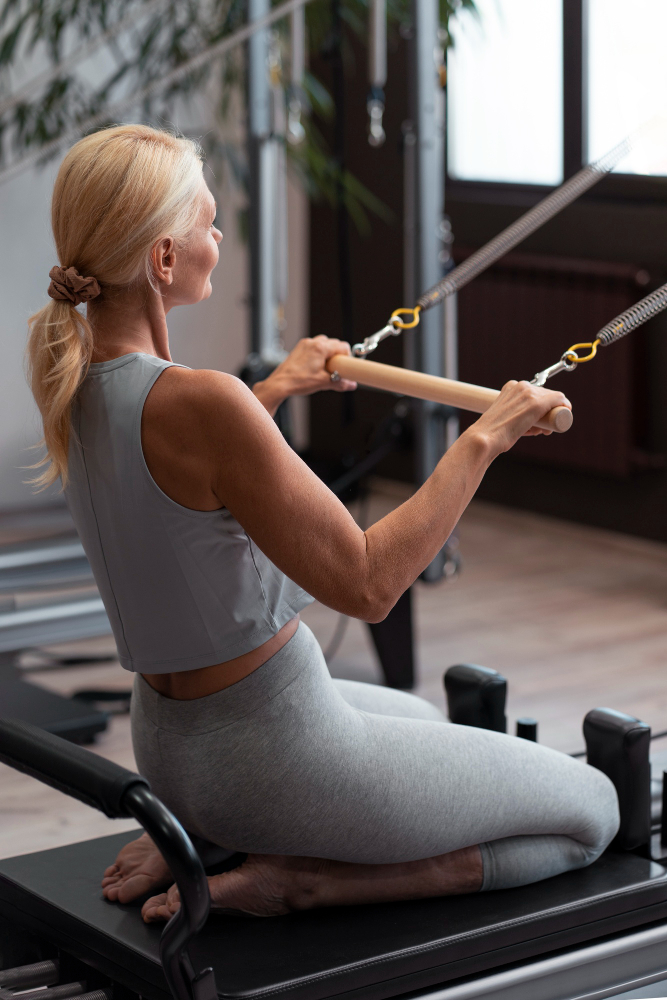
5. Increases Flexibility in All the Right Places
Runners are notoriously inflexible, and while you don’t need to be able to do the splits to run well, certain areas of flexibility are crucial:
Hip Flexor Flexibility Tight hip flexors from all that forward leg motion limit hip extension, reducing stride length and pulling on your lower back. Pilates exercises like the Elephant and various stretches on the Reformer lengthen hip flexors while simultaneously strengthening opposing muscles.
Hamstring Flexibility Tight hamstrings limit stride length and increase injury risk. The controlled, dynamic stretching in Pilates—like the Spine Stretch Forward and Leg Circles—develops functional hamstring flexibility.
Ankle Mobility Limited ankle dorsiflexion (bringing toes toward shin) is linked to Achilles problems, calf strains, and plantar fasciitis. Footwork on the Reformer improves ankle mobility through its full range of motion.
Thoracic Spine Mobility A stiff upper back limits breathing capacity and efficient arm swing. Pilates exercises emphasizing rotation and extension improve thoracic mobility.
What makes Pilates stretching different: Unlike static stretching where you hold a position passively, Pilates uses dynamic stretching—you’re strengthening through your entire range of motion. Research shows this type of flexibility training is more functional and longer-lasting than static stretching alone.
6. Enhances Breathing Efficiency
Proper breathing technique is fundamental to Pilates, and it’s equally important for running—especially at Monument’s high altitude where oxygen is at a premium.
The Pilates breathing pattern: Every exercise in Pilates coordinates specific breathing with movement. You learn to use your full lung capacity, engage your diaphragm properly, and maintain core stability while breathing deeply.
How this helps your running: Many runners are shallow breathers, using only the upper chest. This limits oxygen intake and creates unnecessary tension in neck and shoulder muscles. The breathing patterns learned in Pilates train you to belly breathe—using your diaphragm fully for maximum oxygen intake with minimum energy expenditure.
Additional breathing benefits:
- Stronger respiratory muscles mean less fatigue during long runs
- Better oxygen efficiency at altitude
- Ability to maintain controlled breathing even when fatigued
- Reduced side stitches (often caused by poor breathing mechanics)
7. Provides Mental Training and Body Awareness
Running can be meditative, but it can also be mentally monotonous. Pilates requires intense focus and concentration, providing a mental challenge that complements the mental toughness running demands.
The mind-body connection: Pilates teaches you to tune into subtle sensations in your body. You learn to feel when muscles are engaging properly, when alignment is off, when you’re compensating.
This heightened proprioception (awareness of body position in space) is invaluable for runners. You’ll start noticing during runs: “My left hip is dropping,” or “I’m tensing my shoulders,” or “My cadence is slowing.” This awareness allows you to self-correct before small form breakdowns become injuries.
Mental benefits runners gain from Pilates:
- Improved ability to relax unnecessary muscles while working
- Better focus and ability to maintain form when fatigued
- Enhanced body awareness that prevents injury
- Mental variety that prevents training burnout
- Stress reduction through mindful movement
The Ideal Pilates Schedule for Runners
The question I hear most from runners: “How often should I do Pilates?”
The answer depends on your running volume and goals:
For runners training for a marathon or half-marathon:
- 2 Pilates sessions per week during base building
- 1-2 sessions per week during peak training
- 2-3 sessions per week during taper (when running volume decreases)
For recreational runners (20-30 miles per week):
- 1-2 Pilates sessions per week year-round
For injured runners or those returning from injury:
- 2-3 Pilates sessions per week, potentially replacing some running volume
Timing your Pilates sessions:
- Best done on easy run days or rest days
- Avoid intense Pilates sessions the day before hard workouts or races
- Morning Pilates sessions work well for runners who prefer evening runs
Many Monument-area runners I work with do Pilates on their cross-training days, replacing a second easy run with a Pilates session. This maintains their weekly training stimulus while reducing cumulative impact and injury risk.
Pilates Equipment vs. Mat Work: What's Best for Runners?
While both equipment and mat Pilates offer benefits, equipment-based Pilates (using the Reformer, Tower, Chair, Cadillac, and Step Barrel) provides specific advantages for runners:
Equipment advantages:
- Adjustable resistance allows progressive strengthening
- Assists with flexibility work, helping you achieve ranges of motion difficult to reach on your own
- Provides feedback through spring resistance, helping you feel when muscles engage correctly
- Allows for unilateral (single-leg) work that addresses asymmetries
- Offers more exercise variety to target runner-specific weaknesses
That said, mat Pilates is excellent for maintaining your practice when traveling to races or during running-focused training blocks when you can’t make it to the studio.
At USA Pilates, I typically recommend equipment sessions for runners, progressing to a mix of equipment and mat work once you’ve built a solid foundation.
Real Results: What Runners Experience
In my years working with runners at USA Pilates, I’ve seen remarkable transformations:
Sarah, marathon runner: Came to me with chronic IT band pain that kept her from finishing her last marathon. After 8 weeks of twice-weekly Pilates sessions, she ran a pain-free marathon and PR’d by 12 minutes.
Mike, trail runner: Struggled with lower back pain after long runs. Pilates helped him develop core strength and hip mobility. He’s now running pain-free and tackling longer distances than ever before.
Jessica, 5K to half-marathon: Started running later in life and wanted to build strength to prevent injury as she increased mileage. Regular Pilates sessions helped her progress from 5Ks to half-marathons without a single injury.
Common improvements runners report:
- Reduced or eliminated chronic pain
- Faster race times without additional running mileage
- Improved running form and efficiency
- Better recovery between hard workouts
- Increased confidence and body awareness
- Ability to run longer without injuries
Getting Started: Pilates for Runners at USA Pilates
As a former collegiate runner who found Pilates during my competitive years, I understand exactly what runners need. I’ve spent nearly two decades helping runners in Monument, Colorado Springs, and the surrounding areas run stronger, faster, and pain-free.
Here’s how to start:
New to Pilates? Begin with our Beginner Pilates Package (2 private sessions for $120). I’ll assess your running-specific needs, identify imbalances, and create a plan tailored to your goals.
Experienced with Pilates? Jump into regular private or semi-private sessions designed around your running schedule.
Training for a race? Let’s create a periodized Pilates plan that complements your training cycle—building strength during base phase, maintaining during peak training, and optimizing during taper.
Common Questions from Runners
Will Pilates make me bulky or slow me down? No. Pilates builds lean, functional strength—not bulk. You’ll develop the type of strength that makes you faster and more efficient.
Can I do Pilates on the same day I run? Yes. Many runners do an easy run in the morning and Pilates in the evening, or vice versa. Just avoid intense Pilates sessions on the same day as speed work or long runs.
I’m recovering from a running injury. Can Pilates help? Absolutely. Pilates is often recommended by physical therapists as part of rehabilitation. The low-impact nature allows you to strengthen and stretch without aggravating injuries.
How long before I see improvements in my running? Most runners notice differences within 4-6 weeks of consistent Pilates practice. Improved body awareness comes first, followed by measurable improvements in strength, form, and performance.
Take the First Step
Every runner I’ve worked with wishes they’d started Pilates sooner. Don’t wait until an injury sidelines you. Invest in your running longevity now.
At USA Pilates in Monument, Colorado, I offer specialized programming for runners at all levels. As someone who has lived the runner’s journey—from collegiate competition to recreational trail running with three kids in tow—I understand your goals, your challenges, and your tight training schedule.
Contact USA Pilates today: Phone: (719) 696-4258 Location: 16243 Windy Creek Drive, Monument, CO 80132
Whether you’re chasing a Boston Qualifier or just trying to run pain-free around the Monument trail system, Pilates can help you get there. Your running career will thank you.
About the Author: Jenna Dorsey-Spitz is the owner and lead instructor at USA Pilates in Monument, Colorado. A former collegiate runner and nationally ranked Age Group Triathlete, Jenna discovered Pilates during her competitive running career and has spent 18 years helping athletes enhance their performance. She is one of only 250 Legacy Certified Instructors worldwide and specializes in working with runners to prevent injury and improve performance.