10 Proven Benefits of Pilates for Athletes and Active Adults
Whether you’re a competitive triathlete, weekend warrior, or someone who loves staying active in the beautiful Colorado outdoors, you’re always looking for ways to enhance your performance and prevent injury. The answer might be simpler than you think: Pilates.
As a nationally ranked Age Group Triathlete and certified Pilates instructor with 18 years of experience, I’ve witnessed firsthand how Pilates transforms athletic performance. What started as my secret weapon during my collegiate running days has become the foundation of my training—and the key to helping hundreds of athletes in Monument and Colorado Springs reach their peak potential.
What Makes Pilates Different for Athletes?
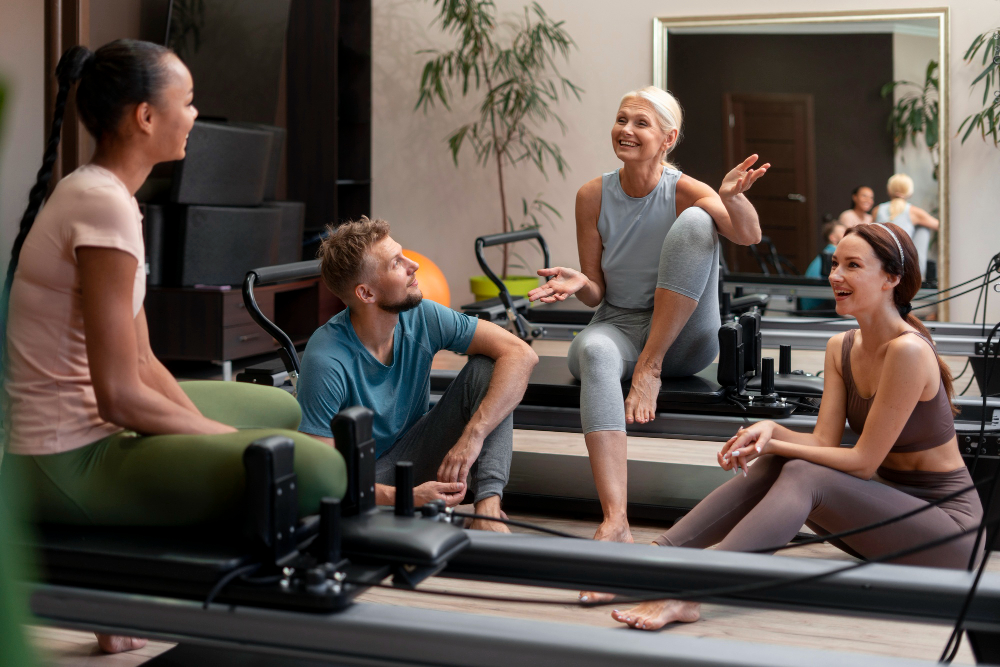
Unlike traditional strength training that often focuses on isolated muscle groups, Pilates trains your body as an integrated system. Every exercise demands core stabilization, controlled movement, and mind-body connection—exactly what athletes need to perform at their best.
Let’s dive into the ten proven benefits that make Pilates an essential component of any serious training program.
1. Bulletproof Core Strength
When most people think “core,” they picture six-pack abs. But true core strength goes much deeper. Your core includes all the muscles that stabilize your spine and pelvis—the deep abdominals, obliques, lower back muscles, hip flexors, and glutes.
Why it matters for athletes: Every movement you make—whether you’re running uphill, cycling into a headwind, or lifting weights—originates from your core. A strong, stable core transfers power efficiently from your lower body to your upper body and vice versa.
Pilates exercises like the Hundred, Plank variations, and Reformer work specifically target these deep stabilizing muscles. Unlike crunches that only work the superficial abs, Pilates builds the foundational strength that protects your spine and maximizes power transfer during athletic movements.
The result: Better endurance, more explosive power, and significantly reduced risk of lower back injuries.
2. Injury Prevention and Rehabilitation
Here’s a sobering statistic: studies show that up to 70% of runners experience an injury each year that interrupts their training. Similar rates affect cyclists, triathletes, and CrossFit athletes.
The Pilates advantage: By identifying and correcting muscle imbalances before they cause problems, Pilates serves as both injury prevention and rehabilitation. The controlled, low-impact nature of Pilates exercises allows you to strengthen weak areas and stretch tight ones without the pounding and stress of high-impact training.
During my years teaching athletes at USA Pilates, I’ve worked with countless clients recovering from IT band syndrome, plantar fasciitis, rotator cuff issues, and lower back pain. The precision and control required in Pilates help them rebuild strength safely while maintaining fitness.
Common athletic injuries Pilates helps prevent:
- Runner’s knee and IT band syndrome
- Lower back pain and disc issues
- Shoulder impingement and rotator cuff problems
- Hip flexor strains
- Plantar fasciitis
- Achilles tendinitis
3. Enhanced Flexibility and Range of Motion
Tight hip flexors from too much sitting? Hamstrings that won’t let you touch your toes? Limited shoulder mobility affecting your swim stroke or overhead press?
Pilates addresses flexibility differently than static stretching. Through dynamic, controlled movements that lengthen muscles while simultaneously strengthening them, you develop functional flexibility—the kind that actually improves athletic performance.
Why this matters: Greater range of motion means:
- Longer, more efficient running stride
- More powerful cycling pedal stroke
- Better swimming technique
- Reduced muscle tension and soreness
- Decreased injury risk
The Reformer, in particular, allows for assisted stretching that helps you achieve ranges of motion that would be difficult or impossible on your own.
4. Improved Posture and Alignment
Poor posture isn’t just about how you look—it directly impacts athletic performance. Rounded shoulders restrict breathing capacity. Forward head position strains neck muscles. Anterior pelvic tilt disrupts running mechanics.
The Pilates solution: Every exercise in Pilates emphasizes proper alignment and body awareness. You learn to find and maintain neutral spine, engage your shoulder blades correctly, and align your pelvis properly.
For athletes training in Monument’s high altitude, where oxygen efficiency is crucial, the postural improvements from Pilates can literally help you breathe easier. Better posture means expanded lung capacity and more efficient oxygen utilization.
Athletic benefits of improved posture:
- More efficient breathing during endurance activities
- Better force production in strength exercises
- Reduced energy waste from compensatory movements
- Less muscle fatigue and tension
5. Mental Focus and Mind-Body Connection
Elite athletes know that physical training is only part of the equation. Mental focus, body awareness, and the ability to perform under pressure separate good athletes from great ones.
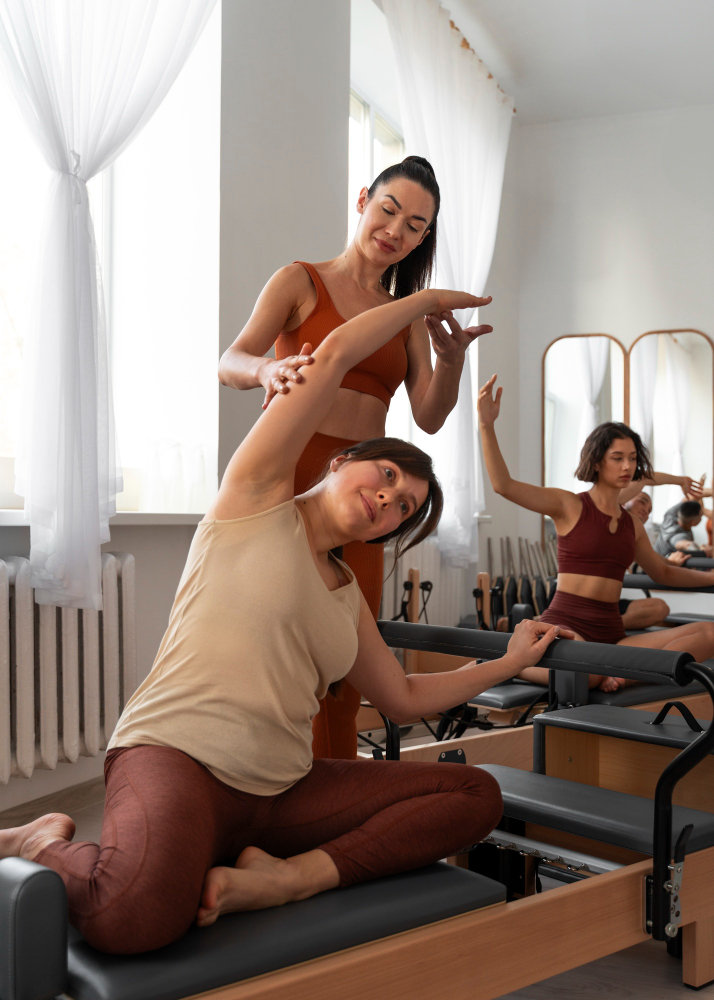
Pilates demands intense concentration. You can’t zone out during a Pilates session the way you might on a long run. Every exercise requires you to focus on breath, alignment, muscle engagement, and controlled movement simultaneously.
This translates directly to athletic performance: The body awareness you develop in Pilates helps you recognize and correct form breakdowns during training and competition. You become more attuned to your body’s signals, knowing when to push and when to back off.
Mental benefits athletes gain from Pilates:
- Improved proprioception (awareness of body position in space)
- Better ability to maintain form when fatigued
- Enhanced focus and concentration
- Reduced performance anxiety through breath work
- Greater mind-body integration
6. Balanced Muscle Development
Most sports create muscle imbalances. Runners develop strong quads but weak hamstrings. Cyclists have powerful legs but weak upper bodies. Swimmers build impressive lats but often have weak rotator cuffs.
These imbalances don’t just limit performance—they’re injury time bombs waiting to explode.
Pilates creates balance: By working both sides of the body equally and targeting commonly neglected muscle groups, Pilates helps create symmetrical strength and prevents the compensation patterns that lead to injury.
At USA Pilates, I frequently see athletes discover they can’t perform certain exercises on their non-dominant side, or that one hip is significantly tighter than the other. Identifying these asymmetries early allows us to address them before they become problems.
7. Increased Power and Explosiveness
You might be surprised to learn that Pilates—often perceived as a “gentle” exercise—can actually increase athletic power. But it’s true, and the mechanism is fascinating.
The science: Power isn’t just about raw strength—it’s about how quickly you can generate force. Pilates improves the neuromuscular efficiency that allows rapid muscle recruitment and force production.
The jump board work on the Reformer, for example, trains explosive lower body power while maintaining core stability. The result? More powerful starts in sprints, higher vertical jumps, and more forceful kicks in swimming.
Sports that particularly benefit from Pilates-developed power:
- Track and field (sprinting, jumping, throwing)
- Basketball
- Volleyball
- Martial arts
- Skiing and snowboarding
8. Faster Recovery Between Workouts
Hard training breaks your body down. Recovery is when you actually get stronger. But what if you could speed up that recovery process?
Active recovery through Pilates helps flush metabolic waste products from muscles, increases circulation, and reduces muscle tension—all without the pounding that creates more damage.
Why athletes love Pilates for recovery:
- Low-impact movement that doesn’t stress joints
- Increased blood flow aids healing
- Gentle stretching reduces DOMS (delayed onset muscle soreness)
- Maintains fitness on rest days without overtraining
- Mental break from high-intensity training
Many athletes in Monument use Pilates as their active recovery day between intense training sessions, maintaining movement quality while giving their bodies the recovery they need.
9. Better Breathing and Oxygen Efficiency
Proper breathing technique is fundamental to Pilates. Every exercise coordinates specific breathing patterns with movement—inhaling during certain phases, exhaling during others.
The athletic payoff: Learning to breathe efficiently under controlled conditions in Pilates transfers directly to breathing under athletic stress. You develop greater respiratory muscle strength and more efficient oxygen utilization.
This is particularly valuable for endurance athletes training at Monument’s 7,000+ foot elevation. The breathing techniques learned in Pilates help compensate for the reduced oxygen availability at altitude.
Breathing benefits from Pilates:
- Increased lung capacity
- Stronger respiratory muscles
- Better oxygen delivery to working muscles
- Reduced breathing rate during exercise (more efficient)
- Enhanced ability to control breath under stress
10. Longevity in Your Sport
Here’s the harsh reality: many athletes are forced to give up the sports they love because of chronic injuries, wear and tear, or simply “getting old.”
But it doesn’t have to be that way.
Pilates extends athletic careers: By maintaining joint health, preventing overuse injuries, and keeping your body balanced and resilient, Pilates helps you stay in the game longer. I’ve worked with athletes in their 60s and 70s who are still competing in triathlons, running marathons, and skiing black diamonds—largely because they’ve made Pilates a consistent part of their training.
The low-impact nature of Pilates means you can practice it for decades without the joint damage associated with high-impact activities. And because it’s endlessly variable in difficulty, it grows with you throughout your athletic career.
How to Incorporate Pilates Into Your Training
You don’t need to become a Pilates devotee to reap the benefits. Even one or two sessions per week can significantly impact your athletic performance.
For optimal results, I recommend:
- 2-3 sessions per week for athletes in heavy training or recovering from injury
- 1-2 sessions per week for maintenance and injury prevention
- Active recovery sessions between high-intensity training days
- Off-season focus to address imbalances and build foundation
At USA Pilates, we work with your training schedule to find the optimal timing and frequency. Many athletes come in during their off-season to address weaknesses, then continue with maintenance sessions during competition season.
Getting Started with Pilates as an Athlete
If you’re new to Pilates, I highly recommend starting with private or semi-private sessions rather than jumping into a large group class. Here’s why:
Individual attention matters: Every athlete’s body is different, with unique strengths, weaknesses, and injury histories. Private sessions allow for customization that addresses your specific needs.
Learn proper form: The precision required in Pilates is what makes it effective. Learning correct form from the start prevents developing bad habits and ensures you get maximum benefit.
Faster progression: With individualized instruction, you’ll advance more quickly and see results faster than in a group setting where the instructor must cater to varied skill levels.
Your Next Steps
Ready to experience how Pilates can transform your athletic performance? At USA Pilates in Monument, Colorado, we specialize in working with athletes of all levels—from weekend warriors to competitive racers.
As one of only 250 Legacy Certified Instructors worldwide and a nationally ranked triathlete myself, I understand your goals because I share them. I know what it takes to stay healthy, strong, and competitive.
Start with our Beginner Pilates Package: Two private sessions for $120 where you’ll learn the fundamentals and experience how Pilates can specifically benefit your sport and training goals.
Contact USA Pilates at (719) 696-4258 or visit our studio at 16243 Windy Creek Drive, Monument, CO 80132.
Your body is your most important piece of athletic equipment. Isn’t it time you gave it the maintenance and training it deserves?
About the Author: Jenna Dorsey-Spitz is the owner and lead instructor at USA Pilates in Monument, Colorado. A nationally ranked Age Group Triathlete and one of only 250 Legacy Certified Instructors worldwide, Jenna has 18 years of Pilates experience and specializes in working with athletes to enhance performance and prevent injury.